The Cash Trap
How Ordinary Shopping Keeps Households Spending Without Building Household Wealth
The Cash Trap
The Cash Trap:
How Ordinary Shopping Keeps Households Spending Without Building Household Wealth
Every month, hardworking families in Nairobi spend significant amounts of money on essential needs such as transportation, food, groceries, rent and other household necessities. Under the conventional “SHOP, EAT, BOARD AND GO” economic model, consumers spend their income repeatedly but generally do not acquire ownership or equity in the businesses they patronize. The money pays for goods and services, while the underlying businesses, properties and productive assets remain owned by other individuals or institutions.
For a household spending KES 30,000 every month, for example:
- KES 360,000 is spent in one year;
- KES 1.8 million is spent over five years;
- KES 7.2 million is spent over 20 years; and
- KES 14.4 million is spent over 40 years.
Stop Funding Other People’s Wealth
Table A illustrates the breakdown of a Nairobi family spending of KES 30,000 monthly. After just one year, they have handed over KES 360,000 to external businesses. Over 5 years, that amounts to KES 1.8 Million, reaching KES 7.2 Million in 20 years and KES 14.4 Million in 40 years. Despite spending a fortune over a lifetime, most people reach old age with zero equity or assets to show for it.
Table A: The Lifetime Spending Leak (KES 30,000 Monthly Baseline)
Service | Daily | Monthly | Annually | In 5 Years | In 20 Years | In 40 Years |
Transport | KES 200 (100 x 2) | KES 6,000 | — | — | — | — |
Restaurants | KES 300 | KES 9,000 | — | — | — | — |
Supermarkets | — | KES 15,000 | — | — | — | — |
Total | KES 500 | KES 30,000 | KES 360,000 | KES 1.8 Million | KES 7.2 Million | KES 14.4 Million |
The important question is:
After spending this money for decades, how much of that expenditure has been converted into an asset owned by the household?
For most consumers, the answer is very little.
This is the challenge that Tree Food Systems seeks to address.
We are developing a new market system based on the principles of the Circular Economy, where consumers are not only buyers of goods and services but can also participate in an economic ecosystem designed to create jobs, support productive enterprises and build household wealth.
Instead of simply:
SHOP → EAT → BOARD → GO
we propose:
SHOP → EARN → INVEST → OWN
Our Goal:
Disrupt the traditional economic system that traps KES 1.8 Million per household in a continuous 5-year spending cycle. We are reversing this model by redirecting that exact same expenditure to fund the construction of your two-bedroom home through our circular economy platform.
How Your Monthly Tier Translates to Home Ownership?
Table B illustrates how routine shopping expenses fund external businesses versus how redirecting those same expenses through our market system can purchase your home over time.
Table B: Redirecting Everyday Spending into Housing Equity
Monthly Household Spending | Annual Spending Redirected | Cumulative Spending (Years to KES 3M+ Home Equity) | 20-Year Spending Total | 40-Year Spending Total |
KES 60,000 | KES 720,000 | KES 3,600,000 (5.0 Years) | KES 14.4 Million | KES 28.8 Million |
KES 50,000 | KES 600,000 | KES 3,300,000 (5.5 Years) | KES 12.0 Million | KES 24.0 Million |
KES 40,000 | KES 480,000 | KES 3,120,000 (6.5 Years) | KES 9.6 Million | KES 19.2 Million |
KES 35,000 | KES 420,000 | KES 3,150,000 (7.5 Years) | KES 8.4 Million | KES 16.8 Million |
KES 30,000 | KES 360,000 | KES 3,024,000 (8.4 Years) | KES 7.2 Million | KES 14.4 Million |
KES 20,000 | KES 240,000 | KES 3,024,000 (12.6 Years) | KES 4.8 Million | KES 9.6 Million |
KES 18,000 | KES 216,000 | KES 3,240,000 (15.0 Years) | KES 4.32 Million | KES 8.64 Million |
RESTORING ECONOMIC EQUITY
The traditional market structure leaves millions of citizens as mere spectators in wealth creation. Reports highlight severe wealth disparity in Kenya, where everyday consumers lack safety nets, health coverage, or retirement security after spending millions across a lifetime. The traditional "SHOP, EAT, BOARD, AND GO" pattern drains consumers without returning value.
Business as usual model
The current business as usual model
Is structured as:
Eat
shop
Board
Go
Where consumers don’t participate in economic development
But have been reduced to a market generating wealth for others
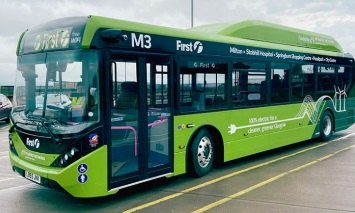
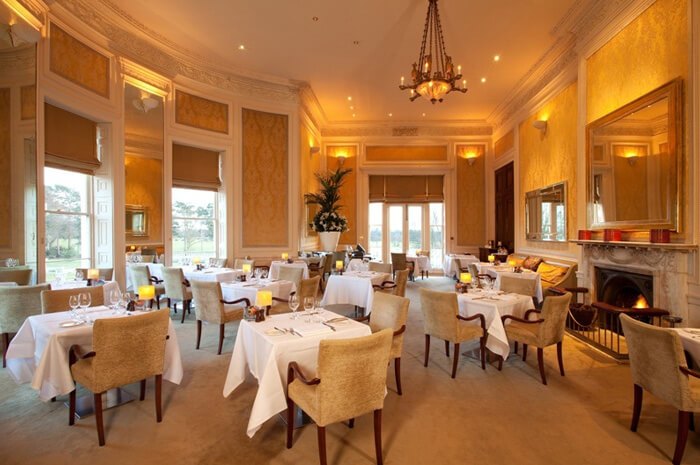
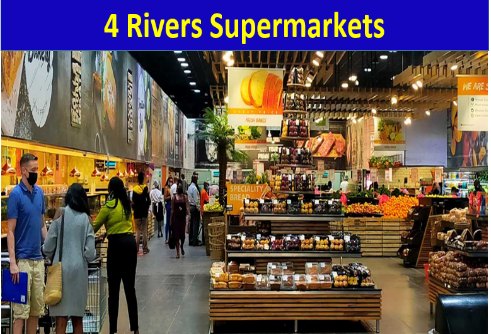
It is a system set to use people
Tree Digital Wallet program
Our Tree Digital Wallet program reverses this dynamic by transforming routine consumption into tangible asset ownership.
- The challenge facing many households is not simply a lack of income. It is also the fact that ordinary consumption rarely creates ownership.
- A person may spend millions of shillings over a lifetime on transport, food, rent and other necessities, yet remain without a meaningful ownership stake in the enterprises serving them.
Tree Food Systems seeks to introduce a different approach.
- Our Circular Economy model is designed to connect consumption with production, employment, enterprise development, housing and other forms of economic participation.
- The objective is to transform the consumer from being only a customer into an active participant in the economic ecosystem.
THE “SHOP-TO-OWN” HOUSING CONCEPT
One of the major objectives of the Circular Economy is to connect everyday economic activity with affordable housing and asset ownership.
Consider a household spending:
- KES 60,000 per month
That represents:
KES 720,000 per year
and:
KES 3.6 million over five years.
- Under the conventional consumption model, this money pays for goods and services but does not automatically become the household's housing equity. Under the proposed Shop-to-Own model, participating members would redirect eligible consumption through the Tree Food Systems market ecosystem, where the programme is designed to channel part of the economic value generated toward productive investments and, subject to the programme's terms, housing development.
The principle is simple:
You already spend money every month.
- The question is whether your spending can also become part of a system that helps you:
- SHOP → EARN → BUILD → OWN.
- This is the fundamental idea behind the Tree Food Systems Circular Economy.
The New Economic Model
The business un-usual model based on a new concept of
Eat
shop
Board
Earn
Join the Circular Economy and Start Building Your Share of the Market
Activate your Tree Digital Wallet, join the Circular Market System, and start to Shop to Earn.
The Tree Digital Wallet
The Tree Digital Wallet is intended to provide the digital mechanism through which participating consumers can track their purchases and their participation in the Tree Food Systems market ecosystem. A member activates the wallet by making the required KES 10,000 activation payment, subject to the applicable membership and programme terms. Once activated, the member can use the wallet to access participating products and services within the Tree Food Systems market system. The purpose is to create a transparent record of eligible transactions and allow the programme to determine how participating economic activity contributes toward the member's applicable benefits, allocations or ownership opportunities under the programme. The digital wallet will enable you to access a monthly mini-statement of your spending within our market system through our digital platform. You will receive a unique code that you can use to access the portal and view your complete shopping and spending history. Every purchase made through our market system—including purchases from participating shops, bus fare, medicines from our pharmacies, and other services—will be recorded and made available to you on a monthly basis. This will enable you to clearly track how much you spend within our system each month and understand the value of your participation in the community-owned economy.
How to Activate Your Account:
- Pay a KES 10,000 activation fee to the Tree Food Systems bank account. (visit payment page)
- Visit our office to receive your official receipt and onboard your Tree Digital Wallet.
- Track every monthly purchase in our unified market system—where every shilling spent counts as an investment toward your home and health care.
Beyond 2040 / Community-Owned Circular Economy
Ready to be part of it?
See the jobs coming to your county, or tell us you are interested.
Browse jobs Join us