New Industries
The industries the business centers are designed to bring to every sub-county.
BEYOND 2040 PROJECT: THE NEW INDUSTRIES COMING TO KENYA
Building a Productive, Industrialized and Community-Owned Circular Economy
For our Beyond 2040 project, KES 400 billion will be invested in driving a new industrial revolution across Kenya
1. Our Vision for Kenya's Industrialisation Beyond 2040
“Beyond 2040 is about moving Kenya from a consumption-driven economy to a production-driven, community-owned circular economy—where agriculture feeds industry, industry creates jobs, the market sustains production, and the economy creates opportunities for ownership.”
We believe that Kenya's long-term economic transformation depends on its ability to build a strong productive and industrial base. A nation must continually strengthen its capacity to produce goods, process its raw materials, create employment, develop local enterprises and retain more economic value within its economy.
This is the foundation of the Beyond 2040 Project.
Our ambition is not simply to build factories. We aim to develop an integrated economic system in which agricultural production, industrial processing, transport, logistics, digital marketplaces, retail outlets and community ownership work together to create a more sustainable and inclusive economy.
Through Tree Food Systems and its proposed community-owned circular economy model, we seek to connect producers and consumers in a system designed to keep more economic activity, business opportunities and value circulating within participating communities.
2. Why Industrialisation Matters
Industrialisation is a major driver of economic transformation. When supported by effective institutions, infrastructure, skills development and reliable markets, it can strengthen national productivity and expand economic opportunities.
Industrialisation matters because it:
- Creates employment: Factories generate direct jobs in production and indirect opportunities in agriculture, transport, warehousing, distribution, retail and supporting services.
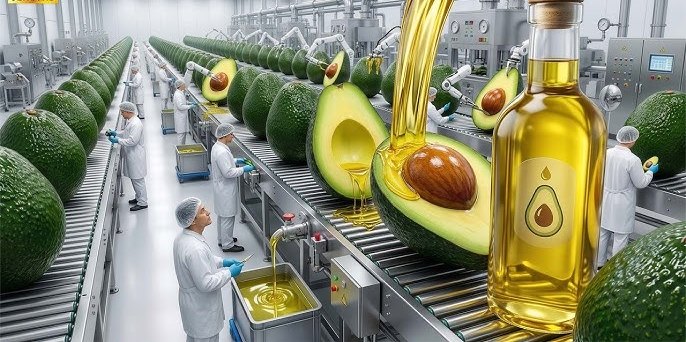
- Adds value to local resources: Agricultural products and other raw materials can be processed into finished or semi-finished goods, increasing their economic value and creating additional business opportunities.
- Strengthens agriculture: Farmers and agricultural cooperatives can supply raw materials to processing industries, helping connect agricultural production to more reliable markets.
- Reduces avoidable supply-chain losses: Appropriate storage, cold-chain facilities, food-drying technologies and modern processing systems can help reduce post-harvest losses and improve the availability of food.
- Develops local enterprises and skills: Industrial projects can support technical training, entrepreneurship, manufacturing expertise and the growth of small and medium-sized businesses.
- Strengthens domestic production: A stronger industrial base can reduce dependence on certain imported products where local production is competitive, while creating opportunities to expand exports.
- Supports regional development: Industries located at county, sub-county and ward levels can bring productive investment and employment opportunities closer to rural farmers, young people, women and other local entrepreneurs.
Industrialisation alone does not guarantee prosperity. Its benefits depend on how industries are financed, managed, supplied with raw materials, connected to markets and integrated into the wider economy.
This is why the Beyond 2040 Project combines industrial development with a proposed community-owned circular market system.
3. The Beyond 2040 Circular Industrialisation Model
We intend to build the market alongside the industries.
One of the challenges facing industrial development is that establishing production capacity does not automatically guarantee that products will find buyers. Factories need reliable supplies, efficient distribution, affordable inputs and sustainable demand.
The Beyond 2040 model seeks to address this challenge by connecting the different parts of the economy through a coordinated network of producers, industries, transport services, digital platforms, retail outlets and consumers.
Our proposed circular industrialisation model will work through the following stages:
Stage 1: Agricultural production
Farmers and agricultural cooperatives produce food and other agricultural raw materials. Through the Tree Food Systems digital platform, the project aims to connect participating cooperatives with markets and relevant processing industries.
Stage 2: Industrial processing and manufacturing
County-level industries, sub-county processing facilities and ward-level factories will be developed progressively, subject to feasibility studies, investment mobilisation and implementation capacity. These facilities will process agricultural products and manufacture goods suited to local demand and available resources.
Stage 3: Transport, storage and distribution
Participating transport operators, refrigerated vehicles, warehouses, aggregation centres and distribution networks will connect farms to factories and finished products to consumers.
Stage 4: Digital market access
The Tree Food Systems digital platform is intended to connect participating producers, manufacturers, cooperatives, retailers and consumers. Consumers will be able to access participating products and services through the platform, while businesses gain another channel for reaching customers.
Stage 5: Consumer demand and market absorption
The circular market system will seek to direct consumer spending towards participating businesses, including food outlets, supermarkets, transport services and other productive enterprises. This can help create recurring demand for locally produced goods.
Stage 6: Reinvestment and community ownership
As participating enterprises generate revenue and, where applicable, profits, the project will explore mechanisms for reinvestment, cooperative participation and community ownership. Any returns to participants will depend on the legal ownership structure, business performance and the terms of the relevant investment arrangements.
The objective is to develop a connected productive economy in which agricultural production supports industry, industry supplies the market, the market generates demand, and successful enterprises can support further investment and job creation.
4. Beyond 2040 Industrialisation Plan
Our proposed industrialisation programme will be implemented progressively through three levels of development.
Short-term projects: Ward-level industries
Ward-level projects will focus on smaller processing and manufacturing facilities, local value addition, agricultural aggregation and enterprises suited to the economic activities of each ward.
The objective is to bring productive opportunities closer to communities, reduce the distance between producers and markets, and create a foundation for local enterprise development.
Medium-term projects: Sub-county industries
Sub-county projects will support larger processing facilities, specialised manufacturing, storage infrastructure and other productive enterprises serving multiple wards.
These facilities will help aggregate raw materials from surrounding communities and connect local production to larger markets.
Long-term projects: County-level industries
County-level projects will focus on major industrial facilities, including agro-processing, food manufacturing, packaging and other industries selected according to county resources, market demand and commercial feasibility.
These facilities are intended to strengthen county economies, create industrial supply chains and support trade between counties and major consumer markets.
The three levels will be designed to complement one another rather than operate as isolated projects. Their development will depend on market assessments, infrastructure, environmental considerations, financing and the availability of suitable raw materials.
5. Proposed National Industrial Investment Framework
The following table presents the indicative investment framework proposed for the Beyond 2040 Project. The figures are planning assumptions for programme development,
Capital Deployment & Allocation Schedule
Funding will be generated through community-driven local capital mobilization mechanisms without reliance on commercial bank loans or unsustainable foreign debt.
Administrative Tier | Number of Units | Allocation per Unit | Total Investment Required | Primary Circular Focus |
Ward Level Factories (Short-Term) | 1,450 | KES 12 Million | KES 17.4 Billion | Raw produce processing, aggregate collection, waste sorting, agri- businesses & composting |
Sub-County Processing Hubs (Medium-Term) | 322 | KES 250 Million | KES 80.5 Billion | Secondary refinement, bio-feed manufacturing, eco-packaging, localized trade |
County Industrial Hubs (Long-Term) | 47 | KES 5 Billion | KES 235.0 Billion | Advanced manufacturing, national supply logistics, export processing, R&D |
TOTAL INVESTMENT | — | — | KES 332.9 Billion | Full National Circular Economic Engine |
The proposed KES 332.9 billion framework represents the combined indicative capital requirement for the three levels of industrial development. Actual investment may vary depending on the industries selected, their scale, infrastructure requirements and implementation timelines.
6. The Market System: Building Demand Alongside Production
The Beyond 2040 Project is designed to develop not only the industries that produce goods, but also the market infrastructure needed to distribute and sell those goods.
Through the proposed Tree Food Systems circular market model, participating industries will be connected to a network of potential suppliers, distributors, retailers and consumers.
The network may include:
- Agricultural cooperatives and organised farmer groups.
- Food-processing, packaging and manufacturing facilities.
- Warehouses, aggregation centres and cold-chain infrastructure.
- Public and private transport and logistics services.
- Supermarkets, retail outlets, restaurants and food businesses.
- Digital marketplaces and consumer-facing services.
- Other participating enterprises that support production, distribution and local economic activity.
For example, a county-level food-processing factory could source produce from local cooperatives, use sub-county aggregation centres and ward-level collection points, and distribute its products through participating supermarkets, restaurants and other retail outlets.
The Tree Food Systems digital platform would help connect these participants and facilitate market access. Consumer demand would provide an important commercial foundation for participating enterprises.
The intended outcome is a more integrated market in which local production and consumer demand reinforce one another, reducing unnecessary supply-chain fragmentation and creating more opportunities for value addition within Kenya.
7. Financing Kenya's Industrialisation Through Local Capital Mobilisation
The Beyond 2040 Project intends to explore ways of mobilising domestic capital to finance industrial development and reduce excessive dependence on high-cost borrowing.
Our proposed approach is to connect community participation, cooperative structures, the Tree Food Systems digital platform and participating enterprises to a broader framework for mobilising investment.
The objective is to develop a model in which Kenyans can participate in building productive assets and supporting enterprises that serve their own markets.
Potential sources of capital may include:
- Contributions from participating members, subject to transparent terms and appropriate safeguards.
- Cooperative investment and pooled domestic savings.
- Private-sector partnerships and strategic investors.
- Supplier financing and equipment-financing arrangements.
- Institutional investment and development-finance partnerships.
- Reinvestment of retained earnings from commercially successful enterprises.
- Carefully structured public-private partnerships where appropriate.
The project will assess the suitability of each financing mechanism according to the nature of the enterprise, expected cash flows, risk, governance and applicable legal requirements.
Our goal is to mobilise local resources wherever feasible, while using responsible external financing and strategic partnerships when necessary. Local capital mobilisation will require transparent accounting, clear ownership arrangements, credible business plans and independent financial oversight.
Visit this link to understand how we plan to raise funding for the industrialization of Kenya
CAPITAL MOBILIZATION & DEPLOYMENT MODEL
8. From Industrialisation to Community Ownership
Traditional industrial development often focuses primarily on establishing factories, increasing production and generating business revenue. The Beyond 2040 Project seeks to extend this approach by exploring how communities can also participate in the productive economy.
Through appropriate cooperative, investment and ownership arrangements, participating communities could have opportunities to support productive enterprises, access markets and participate in the economic value created.
The Tree Food Systems digital wallet and marketplace are intended to support participation in the wider ecosystem, subject to the platform's final design and operating arrangements.
The long-term ambition is to move beyond a system in which people participate only as workers and consumers towards one in which eligible participants can also become members, investors or owners of productive enterprises under clearly defined terms.
Community ownership does not mean that every purchase automatically entitles a consumer to company profits. Participation rights, dividends, equity and other benefits must be established through transparent and legally compliant arrangements.
- Our Commitment: Business as Usual to Business Unusual
The Beyond 2040 Project seeks to promote a new approach to economic development: one that integrates agriculture, industrialisation, digital markets, transport, local investment and community participation.
We envision an economy in which farmers have better access to markets, industries have dependable supply chains, consumers can access locally produced goods, and communities have more opportunities to participate in productive enterprise.
Our proposed county, sub-county and ward-level industrial framework will be developed progressively, with investment priorities guided by feasibility, market demand, financing and measurable economic outcomes.
Beyond 2040 is our vision of a more productive Kenya—where agriculture feeds industry, industry creates jobs, digital markets connect producers to consumers, and a community-owned circular economy helps create opportunities for shared economic participation.
We are working towards a future in which industrialisation is not an isolated programme, but part of a connected economic system designed to support sustainable production, employment creation and long-term national development.
Beyond 2040: From consumption to production. From fragmented markets to a connected circular economy. From participation in the market to opportunities for ownership.
Ready to be part of it?
See the jobs coming to your county, or tell us you are interested.
Browse jobs Join us